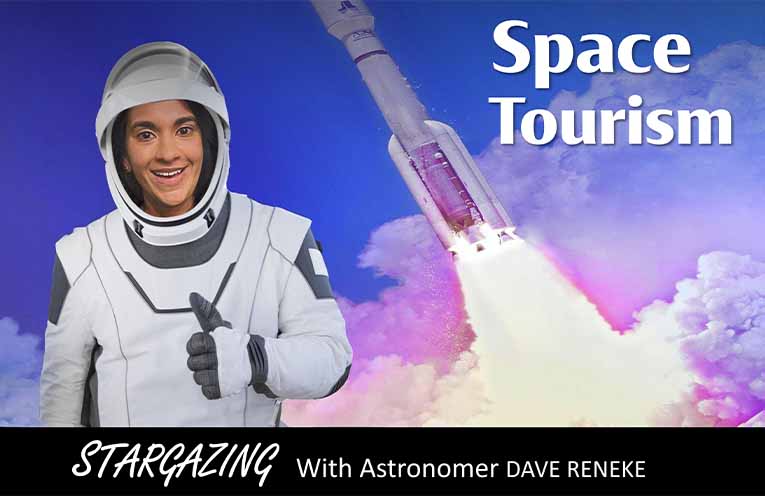
THE dream of space travel, once confined to the realms of science fiction, is rapidly becoming a tangible reality.
In 2025, the space tourism industry is experiencing unprecedented growth, with companies like Blue Origin leading the charge.
The recent Katy Perry all-girl mission has not only captivated the public’s imagination but also paved the way for a future where space travel is as commonplace as a plane journey.
This isn’t just about billionaires escaping Earth’s gravity for a few fleeting minutes. We are at the dawn of a new era – one where space is no longer the exclusive domain of astronauts or scientists but a destination open to curious civilians, adventurers, and even vacationers.
What was once the stuff of Star Trek and Asimov novels is quickly becoming part of our everyday lexicon: spaceports, suborbital flights, zero-gravity lounges, and lunar resorts.
The initial phase of space tourism has been largely suborbital flights that shoot passengers just past the boundary of space, letting them float in microgravity and glimpse the curvature of Earth before returning home.
Blue Origin’s New Shepard and Branson’s Virgin Galactic are perfecting this quick-hop model, and demand is already high, with passenger rosters filling up months in advance.
But the next generation of travel is orbital – and beyond. SpaceX, with its Dragon capsule and upcoming Starship, is preparing for longer-duration flights, possibly circling Earth multiple times or ferrying tourists to lunar orbit.
Soon, we may board sleek, reusable rockets from dedicated spaceports, jetting off into the stratosphere with the same casual confidence we now step onto international flights.
Initially, the destination will be the journey: a few minutes in zero gravity, a view of the Earth no photograph can prepare you for.
But that’s just the beginning.
Next stop? Earth orbit.
SpaceX and others are laying the groundwork for private missions to the International Space Station and eventually to other worlds.
Lunar bases are already on the drawing board.
NASA’s Artemis programme and various commercial partners are planning sustainable Moon habitats, which could be adapted for tourism.
Mars is a longer shot, perhaps though just a few decades away!
Space hotels are no longer sci-fi; they’re serious business.
Orbital Assembly Corporation plans to launch Voyager Station by the end of the decade, a rotating space station that mimics gravity via centrifugal force.
Aerospace firms are already designing luxury accommodations for low Earth orbit. These will cater to both short-term tourists and long-term researchers, blending adventure with comfort.
While big price tags remain steep, costs are dropping rapidly thanks to reusability, private competition, and maturing technology.
In the same way air travel evolved from an elite luxury to an everyday utility, space tourism is following the same curve.
Analysts expect the market to grow into a multi-billion-dollar industry by the 2030s. It won’t be long before travel agencies offer “space vacation packages” and high schools run zero-gravity science camps.
It’s closer than you think.
In 2024 alone, we saw multiple successful missions with civilian passengers.
By the end of the decade, regular orbital vacations and even lunar flybys could be a reality.
By 2040, it’s likely that the middle class will have viable options for saving or financing a trip to orbit.
The future isn’t just coming—it’s launching. The final frontier is open for business, and before long, space will be just another dot on the travel map.
A little farther than Paris or Tokyo, perhaps—but infinitely more awe-inspiring.
See Dave’s website: www.davidreneke.com