THE first ever climate change case to reach the High Court of Australia will be heard on Wednesday, 13 May.
The landmark moment will set a national precedent on whether Australian planning authorities are legally required to consider the local climate impacts of fossil fuel project approvals.

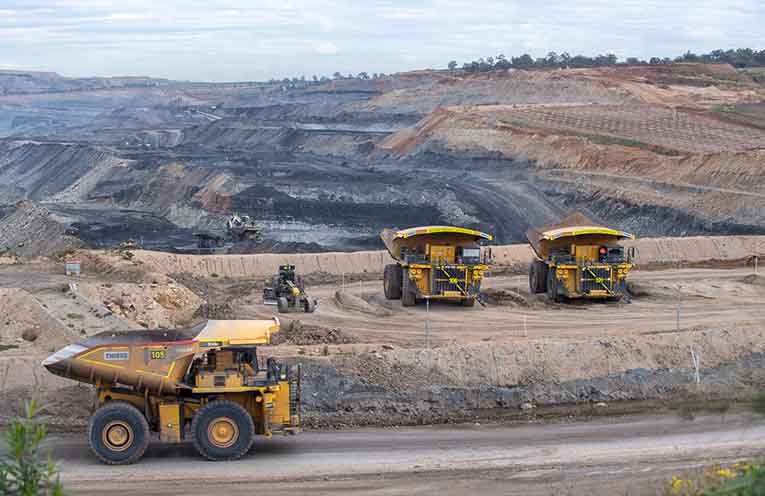
The case, MACH Energy Australia Pty Ltd v Denman Aberdeen Muswellbrook Scone Healthy Environment Group Inc (DAMS HEG), was brought by a grassroots Hunter Valley community group challenging the approval of a major expansion of the Mount Pleasant open-cut coal mine near Muswellbrook.
MACH Energy sought to double the mine’s output to 21 million tonnes per year and extend its life to 2048.
The NSW Court of Appeal ruled unanimously in July 2025 that the mine’s approval was unlawful, finding that planning authorities are legally required to consider the specific local climate impacts of a project’s downstream emissions.
MACH Energy is now asking the High Court to overturn that ruling.
Four of the world’s leading climate law and science institutions have been granted leave to intervene in the High Court in support of DAMS HEG – from the Universities of Cambridge, Columbia and Melbourne, and the Union of Concerned Scientists.
The case is being watched internationally as a test of whether domestic law can hold fossil fuel producers accountable for the local consequences of dangerous climate change.
Driving the case forward for DAMS HEG is group president Wendy Wales and her husband Tony Lonergan, the group’s treasurer.
Both retired science teachers, Wendy and Tony run a farm in the Upper Hunter Valley, surrounded by open-cut coal mines.
They have led the case through three court levels over four years.
“Our communities are enduring increasingly terrifying climate disasters, and nature is deteriorating before our very eyes,” Wendy said.
“Yet our governments are continuing to throw fuel on the fire by approving massive new projects and expansions like MACH Energy’s Mount Pleasant Optimisation Project.
“We have felt the catastrophic impacts of droughts, bushfires, floods and a myriad of other tragic events.
“The short term economic benefits can not be given priority over the exponentially increasing long term consequences.”
Professor Nicole Rogers, a Professor of Climate Law at Bond University, said Australia’s apex court hearing its first climate change case is a “watershed moment in the history of Australian law”.
“Courts around the world – from The Hague to London to Canberra – are being asked the same fundamental questions: can legal systems keep pace with the climate crisis and to what extent are decision makers who continue to approve fossil fuel projects accountable for climate impacts?
“The Mount Pleasant case is Australia’s latest contribution to that global conversation, and the High Court’s answer will be studied by others well beyond the Upper Hunter Valley.”
Just 12 hours before the NSW Court of Appeal’s July 2025 ruling, the International Court of Justice in The Hague delivered its own landmark advisory opinion, finding that fossil fuel-exporting nations bear legal responsibility under international law for the climate harm their exports cause.
Australia had argued to the ICJ that it bore no such responsibility for emissions from its coal and gas exports.
The ICJ rejected that argument.