HEAT can kill.
That’s the message from the Red Cross and Health Direct as we face the prospect of heatwave conditions over the summer months.
According to the Institute of Health and Welfare there were 2.143 hospital admissions related to extreme heat between 2019 and 2022.
These included 348 patients from New South Wales, 410 from Victoria, 717 from Queensland, 266 from South Australia and 267 from Western Australia.
People 65 and older and those between 25 and 44 were the most common groups affected by heat-related injuries, with men making up more than double the hospitalisations than women in these two categories.
Health Direct notes that in extreme hot weather some groups of people are also at higher risk, for example, people who are:
– very old or very young
– pregnant or breastfeeding
– living with overweight or obesity
– not physically fit
– homeless or isolated.
The Sydney Children’s Hospital Network states, “Children are more at risk of heat-related illnesses as their bodies cannot cool down as well as adults.
“Children sweat less, and their body temperatures can rise faster, especially in hot or humid weather.”
The Red Cross App explains that people need to be aware of the interaction between medicine and heat.
“A healthy cardiovascular system is required to regulate heat in the body.
“Those with cardiovascular disease, or who are taking medication that alters the function of their cardiovascular system may have a harder time regulating their body making heatwaves particularly dangerous.
“Respiratory disorders that affect lungs such as, chronic obstructive pulmonary disease and respiratory tract infections can worsen in extreme heat.
“Heat and air pollution can inflame the airways resulting in sudden and severe respiratory distress.
“Certain medications may reduce a person’s ability to regulate their body temperature, inhibit normal sweating, affect cognitive alertness, change blood pressure or cardiac output and alter kidney function.”
On its website the Red Cross identifies four simple steps to prepare for a heatwave: Know, Connect, Organise, Act.
It recommends people avoid tea, coffee, alcohol and sugary drinks and eat small meals and cold foods like salads and fruit.
The site emphasises the fact that people need to recognise the symptoms of heat stress, heat exhaustion and heat stroke and the treatment required to alleviate them.
“Heat exhaustion happens when someone becomes dehydrated due to fluid loss from a hot environment and/or excessive physical activity,” the Red Cross states.
Left untreated it can lead to heatstroke, a life-threatening condition, that occurs when your core body temperature reaches 40 degrees celcius or higher
The signs and symptoms of heat stroke include:
– red, hot and dry skin
– rapid strong pulse
– rapid noisy breathing
– body temperature above 40’C
– typically, no longer sweating
– irrational or aggressive behaviour
– fitting, staggering, confusion and deterioration of consciousness.
Treatment:
– Immediately call 000 for an ambulance
– If available, have the person take a cold shower or bath.
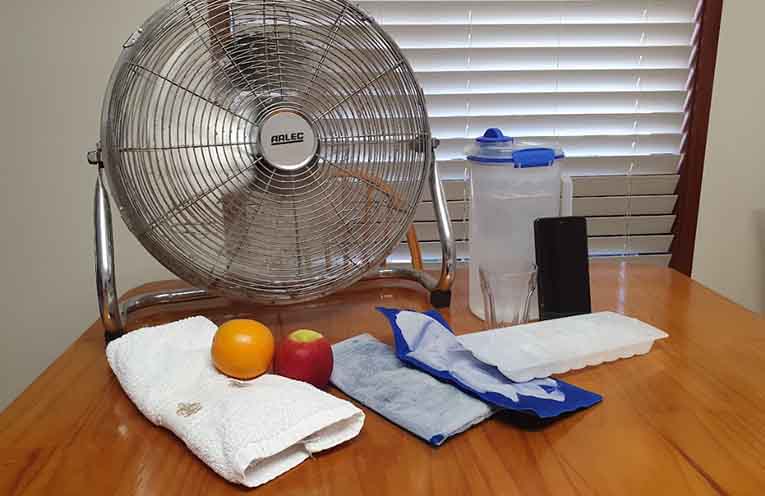
– Cool the person with household items such as wet towels, fans or icepacks placed in the neck, groin and armpits.
– If unresponsive or not alert, place in the recovery position.
Prepare to give CPR if necessary.
The Red Cross site has a comprehensive list of strategies to help people prepare for heatwaves.
Visit redcross.org.au/prepare.
By Marilyn SANDERSON