THE poultry industry is on alert after seven suspected bird flu cases were found in native species, potentially marking a new phase for the outbreak.
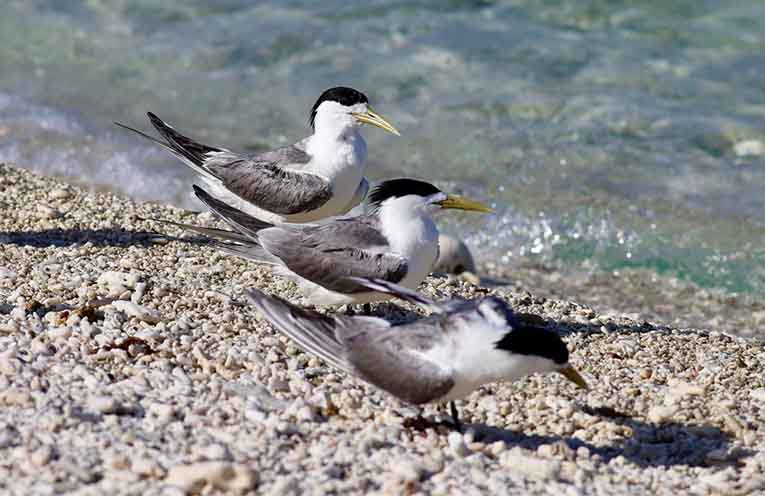
The poultry industry is on alert after seven sick greater crested terns were found in South Australia’s southeast, sparking fears of a local transmission.

Five were collected from Southend in what could be the outbreak’s first cluster of cases in Australia.
“This is the announcement conservationists have been dreading,” the Invasive Species Council said.
Australia has 20 confirmed cases across SA, Western Australia, NSW and Queensland to date.
But only one has been discovered in an Australian native, non-migratory bird species.
The greater crested terns have been sent to the Australian Centre for Disease Preparedness in Geelong for final testing to confirm whether they will be officially added to the growing list.
Authorities stressed there had been no detections in poultry or the broader agricultural industry and no mass mortalities, adding that the risk to human health remained low.
However the poultry industry was bunkering down following the “unwelcome news” in SA.
“There is a very high possibility that it will eventually get into poultry,” SA primary industries minister Clare Scriven told reporters on Monday.
“What we have been focused on with industry is that they will be as prepared as possible.”
SA chief veterinary officer Skye Fruean said the focus should be on surveillance in a bid to contain the disease’s spread as authorities waited on final testing results for the seven new suspected cases.
“We can’t stop it spreading. What we can do is pick it up as early as possible and that will help us take action,” she said.
“Until we get to the point of it being confirmed that we have local birds spreading it between each other, the situation doesn’t change.”
However the Invasive Species Council feared the discovery of the greater crested terns could mark a pivotal bird flu moment in Australia.
“If these cases represent local transmission, we’re entering a very different phase of this outbreak,” policy director Carol Booth said.
“Instead of isolated infected birds arriving on our shores, we’re potentially seeing the virus spreading through Australian wildlife.”
Greater crested terns are a common and widely distributed species on the Australian coastline.
They are approaching the breeding season, which increases the risk of transmission as the birds gather in close-knit colonies of thousands.
“We have watched this story unfold overseas. It starts with a handful of dead seabirds,” Dr Booth said.
“Then breeding colonies begin collapsing … entire populations of vulnerable wildlife are pushed towards the brink.
“No Australian wants to witness that happen here, but today is a reminder that it could.”
She reiterated calls for the Commonwealth to invest $200 million in a wildlife resilience package.
It includes tightening invasive cat and fox control, eradicating invasive species from islands and restoring wetlands to strengthen aquatic bird habitats.
Final test results for the seven birds collected in SA were expected in one or two days.
“The overseas experience has shown that we do expect it to spread,” Dr Fruean said.
“We don’t know what this is going to mean for Australia but we are preparing for the worst.”
By Andrew STAFFORD and Laine CLARK, AAP