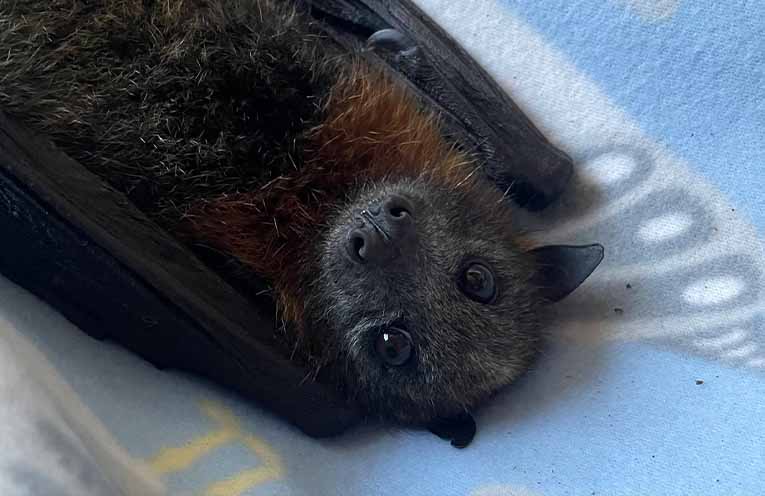
A MASS starvation event is killing flying foxes across large tracts of NSW.
Residents across the state are taking to social media to report uncharacteristic daytime behaviour and close suburban encounters with the flying mammals as they desperately search for food and water.
The Wildlife Information Rescue and Education Service (WIRES) recently shared news of the event.
“We are sad to report that a terrible starvation event is occurring for our precious native flying foxes across large regions of NSW,” it said.
“Habitat loss and a relatively dry winter has yielded poor quality and quantity of nectar in flowering gums and natives.”
This acute lack of food and hydration has triggered the heartbreaking crisis currently unfolding.
Flying foxes are succumbing to severe emaciation and organ failure from dehydration.
This hits pregnant or lactating mums hard.
Flying fox pups are generally born during October and rely entirely on their mothers for nutrition, hydration, comfort and safety, for the first three to six weeks of life.
“Many malnourished and dehydrated female flying foxes are in the final month of their gestational period and are tragically losing their young,” WIRES wrote.
“They just haven’t got the nutritional health or strength to produce milk or carry to full term.”
This has translated to spontaneous early births, or miscarriages, and pups of birth weight less than half of what would normally be expected.
Many are being found deceased with their umbilical cords and/or placentas still attached.
It is not just the mums and pups that are affected.
“We are also receiving reports of unusual behaviour in flying foxes, as they strive to find available foods and water,” WIRES wrote.
“They’re eating off the ground, drinking water from the grass after the rain, and hanging too low in trees.”
While some reports and photographs are from intrigued and even delighted residents discovering the winged, nocturnal mammals in their back yards in daylight, their presence is no cause for celebration.
The desperate shortage of native nectar and pollen and extreme hunger is forcing them to forage in new environs and change their routines.
WIRES has issued a plea for people to remove netting and barbed wire from flowering or fruiting trees, and to keep dogs away if flying foxes are hanging low in trees.
People who wish to help feed the animals are encouraged to make wire fruit garlands, using fresh, seeded, wedges of fruit such as apples, pears and melon, threaded onto a piece of wire, with the ends secured and covered with tape.
These should be secured in a tree, at least two metres above the ground.
“If you find a sick or injured flying fox – please don’t touch it,” WIRES wrote.
“Call WIRES on 1300 094 737 or your local wildlife group for help and advice.”
To find help:
Download IFAW’s Wildlife Rescue App, which will connect you with the closest licensed wildlife rescue group.
Hunter and Port Stephens
Hunter Wildlife Rescue 0418 628 483 (Native Animal Trust Fund)
WINC 1300 946 295 (Wildlife in Need of Care)
WIRES 1300 094 737 (Wildlife Information Rescue and Education Service)
Gloucester, Stroud, Dungog, Bulahdelah
FAWNA 02 6581 4141